
EU fulfilment for UK brands has changed significantly since Brexit. Orders moving from Great Britain into the European Union now cross a customs border, which means ecommerce businesses need to consider VAT, customs requirements and how their fulfilment model affects European customers.
For growing brands, this creates an important question. Should every European order continue to travel from the UK, or does it make more sense to hold stock within the EU?
There is no single answer for every business. Order values, European sales volumes, customer locations and inventory requirements all play a role. However, understanding VAT, OSS, IOSS and the practical benefits of EU based stock can make the decision much clearer.
What Changed for UK Brands After Brexit?
Before Brexit, goods could move between the UK and EU as part of the EU Single Market. For businesses in Great Britain, that is no longer the case.
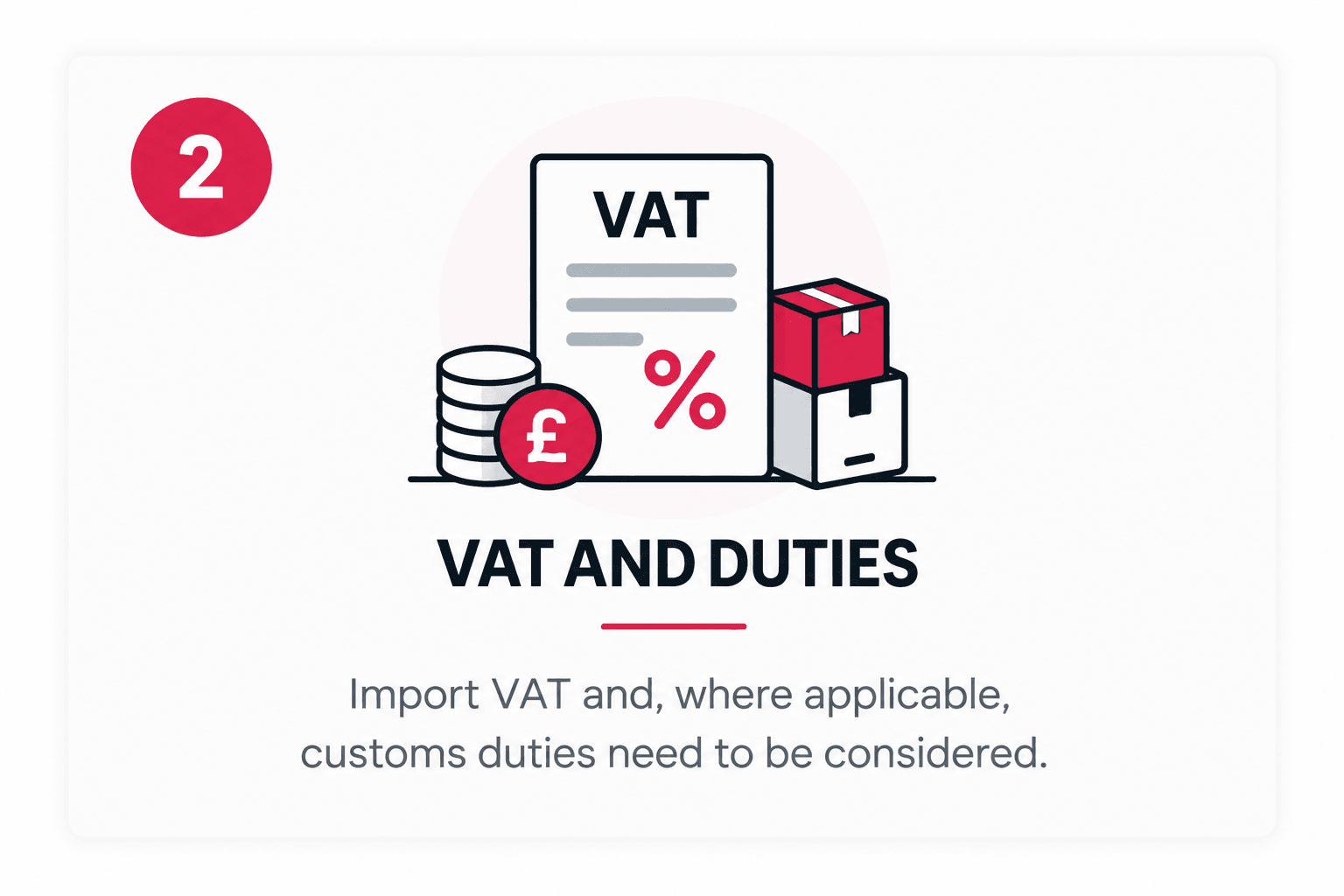
Goods entering the EU from Great Britain now need to go through customs procedures. Businesses also need to consider import VAT and, where applicable, customs duties. The VAT treatment can depend on where the goods are located when the sale takes place and how they reach the customer.
This has a direct impact on ecommerce fulfilment.
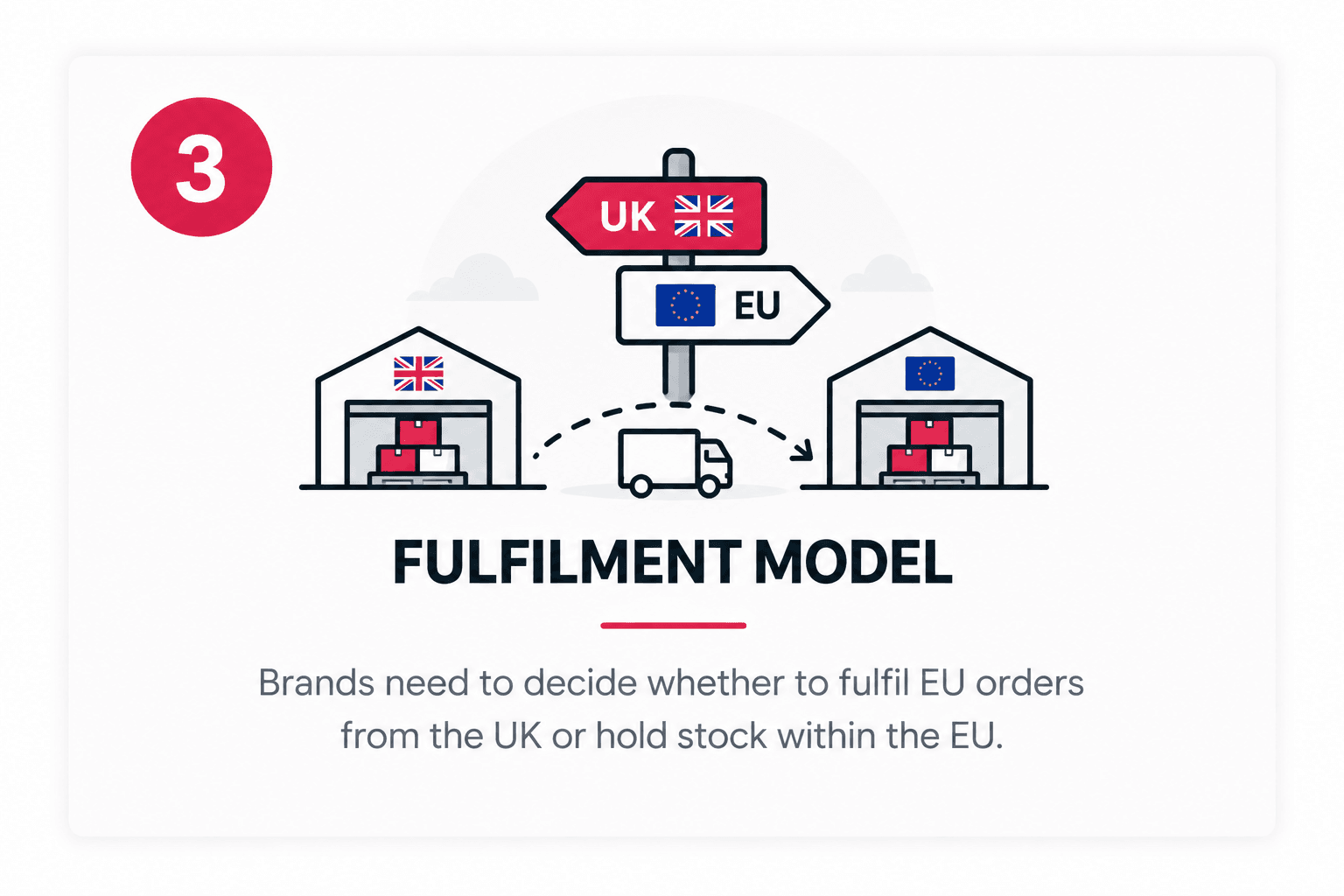
A business sending individual parcels from a UK warehouse into different EU countries operates very differently from one that imports stock into an EU warehouse and then fulfils European orders locally.
For brands with growing EU sales, choosing between these models can have a significant impact on operational complexity and the customer experience.

VAT, OSS and IOSS for UK Brands Explained
VAT, OSS and IOSS are closely connected to European ecommerce, but they serve different purposes.
Understanding the basics can help UK brands identify which questions they need to address when planning European expansion.
VAT and EU Ecommerce
VAT is generally charged in the country where consumption takes place. For UK ecommerce businesses, the process becomes more complex when products cross from Great Britain into the EU.
Import VAT may become relevant when stock enters the EU. Further VAT obligations can then depend on where inventory is stored and where customers are located.
Because the exact requirements depend on the structure of the business and movement of goods, brands should obtain professional tax advice before choosing their VAT setup.
How OSS Works
The One Stop Shop, known as OSS, can simplify VAT reporting for eligible B2C sales across EU Member States.
Instead of registering separately for VAT reporting in every country where eligible distance sales take place, businesses can use a single OSS registration and return to report VAT across participating EU markets.
For a UK business holding inventory within the EU, OSS can therefore become particularly relevant when products are sold from that stock to consumers in other EU countries.
How IOSS Works
The Import One Stop Shop, or IOSS, is designed for eligible distance sales of imported goods in consignments with an intrinsic value not exceeding €150.
IOSS allows VAT to be collected from the customer at the point of sale and reported through the IOSS system. This can create a more predictable VAT process for qualifying direct to consumer imports.
2026 CUSTOMS UPDATE
From 1 July 2026, the EU removed the previous customs duty relief for goods valued below €150 and introduced a temporary €3 customs duty per item on relevant low value consignments of up to €150 sent directly to EU consumers.
Brands should therefore not assume that IOSS makes low value shipments automatically free from customs duties.
IOSS or EU Stock: Which Fulfilment Model Makes Sense?
IOSS can help manage VAT on eligible direct to consumer imports. However, it does not remove the operational difference between sending individual parcels across a customs border and fulfilling orders from inventory already positioned within the EU.
For UK ecommerce businesses, there are two fundamentally different approaches.
01 / FULFIL FROM THE UK
Shipping Orders from the UK
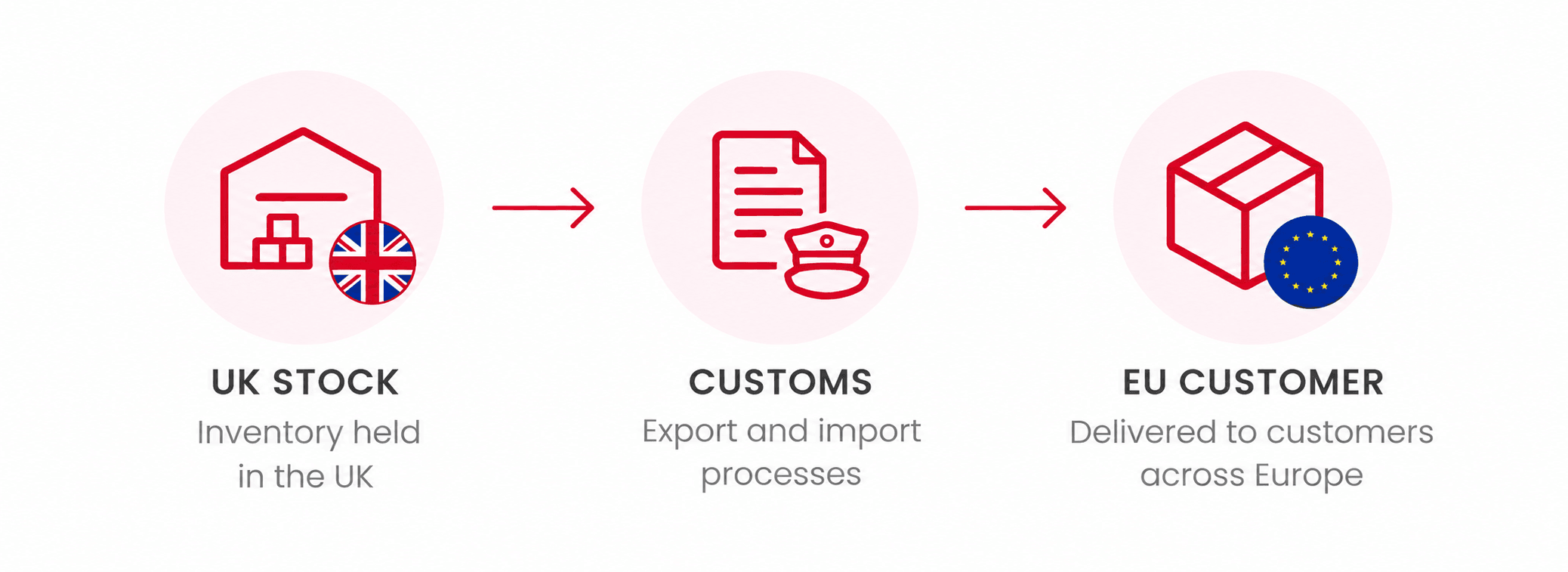
A brand can keep its inventory in the UK and send each European customer order internationally.
This approach can make sense when testing European demand or when EU order volumes remain relatively low. The business does not need to position significant inventory in another market before knowing how demand will develop.
However, every EU order remains part of a cross border fulfilment process.
As European sales grow, businesses may therefore need to assess whether continuing to fulfil every order from the UK remains the most practical model.
02 / HOLD STOCK IN THE EU
Holding Stock in the EU
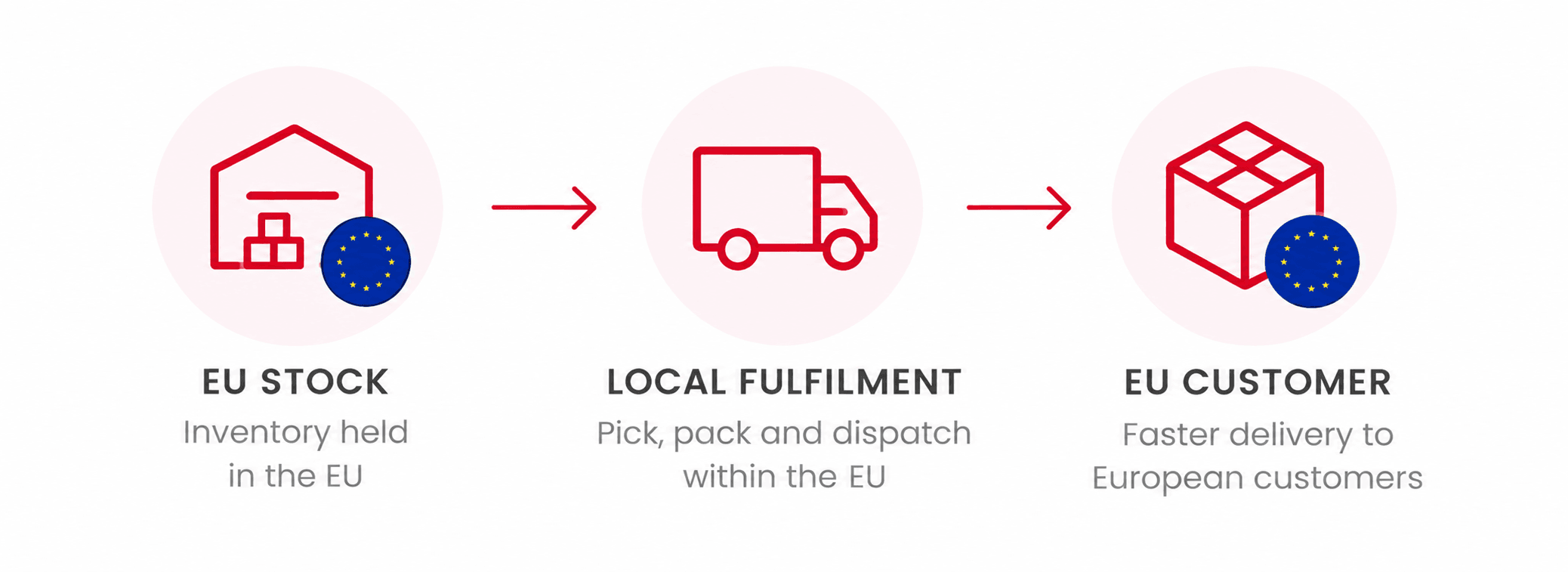
The alternative is to move inventory into an EU warehouse and fulfil European customer orders from there.
Rather than every individual order beginning its journey in Great Britain, stock can enter the EU in larger movements before customer orders are processed locally.
For brands with established European demand, this can create a fundamentally different fulfilment structure.
Why Holding Stock in the EU Can Make Sense
Moving inventory closer to European customers can provide several operational advantages.
Fewer Individual Cross Border Movements
European customer orders can leave from inventory already positioned within the EU rather than every parcel crossing the UK and EU customs border individually.
Closer Access to European Customers
Stock starts its final journey from within the EU, creating a more direct fulfilment route to customers across European markets.
Greater Potential for Scale
As European order volumes increase, fulfilment capacity can grow around inventory already positioned within the market.
Separate Stock Strategies for Different Markets
Brands can maintain inventory in the UK for domestic demand while positioning appropriate stock within the EU for European customers.
Holding EU inventory is not automatically the right solution for every business. Sales volume, product type, inventory turnover, customer location and VAT obligations all need to be considered.
EU Fulfilment for UK Brands from Prague
For businesses that decide to position stock inside the European Union, warehouse location becomes an important part of the strategy.
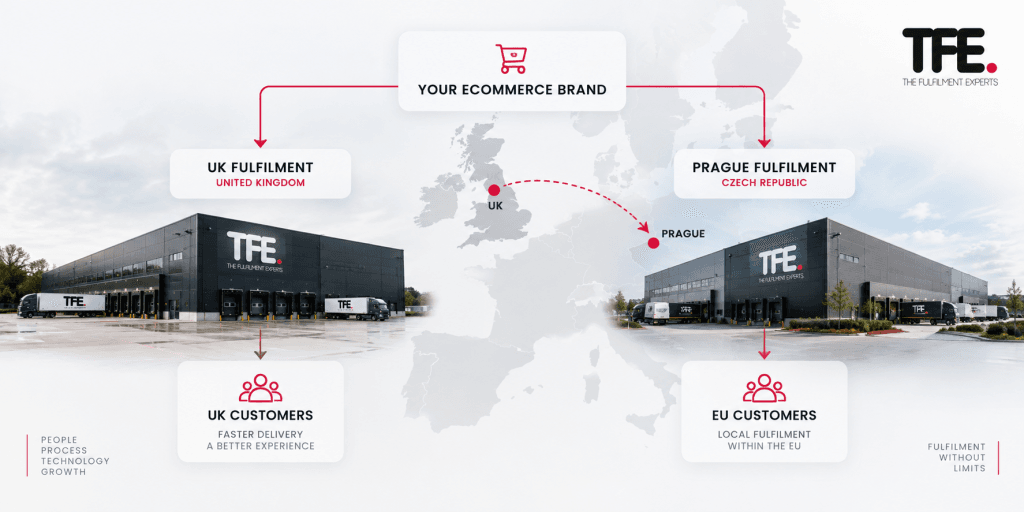
The Fulfilment Experts operates an EU fulfilment centre in Prague, Czech Republic, providing UK ecommerce businesses with an established location for storing stock and fulfilling European orders.
Through TFE’s Prague fulfilment operation, brands can access warehousing, inventory management, ecommerce fulfilment, B2B fulfilment, returns management and order dispatch within the EU.
For a UK brand, this creates the possibility of a simple two market structure: UK stock for UK customers and Prague stock for EU customers.
Instead of trying to serve both markets from a single warehouse, businesses can position inventory according to where customer demand exists.
TFE’s Prague operation also uses Mintsoft warehouse management technology, helping provide visibility over inventory and fulfilment activity as brands manage European orders.
One Fulfilment Strategy Across the UK and EU
Operating from both the UK and EU does not have to mean creating two disconnected logistics operations.
A coordinated inventory strategy allows a business to determine where stock should sit based on customer demand. Orders can then move through the fulfilment location best suited to the market they serve.
Technology becomes particularly important as the operation expands.
Through TFE’s Digital Warehouse, brands can maintain visibility over stock levels, orders and fulfilment activity. Connected ecommerce integrations can also help sales channels communicate with the wider fulfilment operation.
This gives growing brands a clearer picture of inventory while reducing the need to manage separate manual workflows as order volumes increase.
The aim is not simply to add another warehouse. It is to build a fulfilment structure that can support growth across both markets.
When Should UK Brands Consider EU Fulfilment?
Not every ecommerce business needs to move stock into Europe immediately.
For brands testing a new market, fulfilling orders from the UK may provide useful flexibility while European demand develops. However, the case for EU based inventory can become stronger as sales increase.
✅ European orders are becoming consistent: Regular EU demand can make a dedicated European stock position more practical.
✅ Cross border fulfilment is becoming more complex: Growing volumes can increase the operational demands of fulfilling individual orders from the UK.
✅ Delivery expectations are harder to meet from the UK: Positioning inventory closer to customers can create a more direct fulfilment route.
✅ You want inventory closer to EU customers: EU based stock can support a fulfilment model designed specifically around European demand.
✅ Europe is becoming a long term growth market: A dedicated EU stock strategy becomes more relevant when European sales form a meaningful part of future growth.
The fulfilment model can evolve over time. A business may initially ship European orders directly from the UK. Once sales reach a level that supports a dedicated EU stock position, part of the inventory can move into an EU fulfilment centre.
This allows the logistics strategy to develop alongside demand rather than requiring the business to commit to a complex European operation from the beginning.
Build a Fulfilment Strategy for UK and EU Growth
Brexit has made European ecommerce more complex for UK brands, but it has not removed the opportunity to build a successful customer base across the EU.
VAT, OSS, IOSS, customs requirements and inventory location all need to form part of the decision. Most importantly, the fulfilment model should reflect where customers are located and how the business expects European sales to develop.
For brands with established EU demand, holding inventory within Europe can provide a more direct route to European customers. Combined with UK fulfilment, it can also create a structure designed around two distinct markets rather than forcing every order through one warehouse.
The Fulfilment Experts can support growing ecommerce businesses with fulfilment operations in both the UK and Prague, helping brands build a logistics strategy around their UK and European growth.