
The 3PL onboarding process can feel like one of the biggest barriers to outsourcing fulfilment. Moving stock, connecting ecommerce platforms and changing how customer orders are dispatched may seem like a significant operational change.
In practice, onboarding should be a structured transition rather than a sudden switch.
During the first 30 days, the focus is typically on understanding the operation, connecting systems, receiving inventory, testing workflows and preparing the first customer orders for dispatch.
Here is what ecommerce brands can expect as the new fulfilment operation takes shape.
Before Day One: Preparing for a Smooth Transition
A successful onboarding starts before stock arrives at the fulfilment centre.
The first step is understanding the existing operation and gathering the information needed to configure systems and warehouse processes correctly.
This usually includes:
✅ product catalogue and SKU information
✅ existing stock levels
✅ ecommerce sales channels
✅ expected order volumes
✅ packaging requirements
✅ courier preferences
✅ returns processes
✅ special handling requirements
Having this information ready helps the 3PL onboarding process move more smoothly and gives both the brand and fulfilment partner a clearer picture of what needs to be prepared before stock starts moving.
Incomplete product data, unusual integrations or specialist fulfilment requirements can add time to onboarding, which is why good preparation matters from the beginning.
Week 1: Starting the 3PL Onboarding Process
The first week focuses on understanding how the business currently works and what the new fulfilment setup needs to support.
Product types, order profiles, packaging expectations and delivery requirements can all influence how the warehouse operation needs to work.
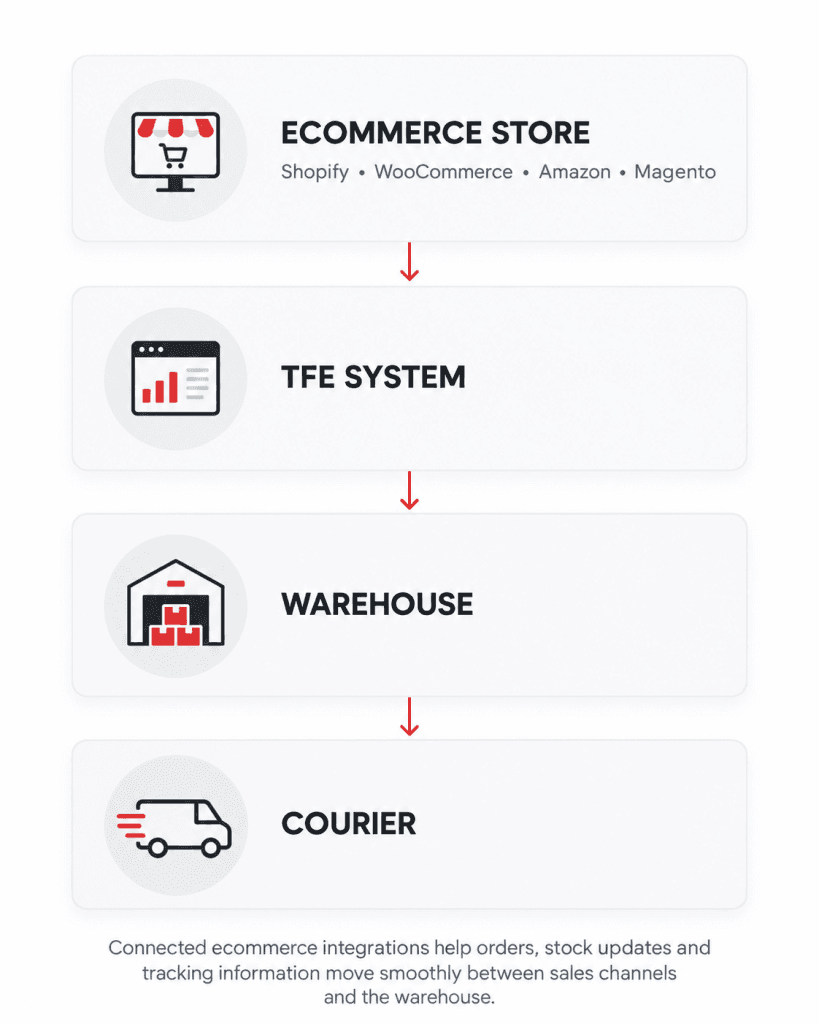
At the same time, the team can begin connecting the ecommerce platform or marketplace with the warehouse management system.
Connected ecommerce integrations allow orders and inventory information to move between sales channels and the fulfilment operation without relying on manual processing.
Depending on the business, this may include platforms such as Shopify, WooCommerce, Amazon, Magento or other ecommerce systems.
The team can then configure shipping services, courier rules, order routing and stock allocation around the needs of the brand.
The objective is not simply to copy the previous setup. It is to create an operation that reflects how the business actually needs to fulfil customer orders.
Week 2: Stock Intake in the 3PL Onboarding Process
Once the systems are taking shape, physical inventory can begin moving into the fulfilment centre.
When stock arrives, the warehouse team checks the delivery against the expected inventory information. The team records the products in the warehouse management system and assigns them to appropriate storage locations.
Any differences between expected and received stock need to be resolved before live fulfilment begins.
With inventory in place, the team can prepare the warehouse processes that will support customer orders.
Picking
Pick strategies reflect the products and expected order profile, helping the warehouse team locate items efficiently and maintain accuracy.
Packing
The team prepares packaging, inserts and any branded materials before live orders begin.
Shipping
Courier services and shipping rules reflect destination, delivery speed and order type.
Returns
A clear returns process helps the warehouse receive, assess and process returned products consistently.
Week 3: Testing the 3PL Onboarding Process
Testing is one of the most important stages before go live.
The first real customer order should not be the first time the complete fulfilment workflow runs from beginning to end.
Instead, test orders can confirm that systems, warehouse processes and shipping rules work together correctly.
CREATE TEST ORDER
A test order is placed through the connected sales channel.
PICK AND PACK
The warehouse processes the order using the configured picking and packing rules.
SHIP
The correct courier service and shipping method are applied.
CONFIRM AND REVIEW
Tracking, stock updates and order status are checked before live fulfilment begins.
The objective is simple: identify issues during testing, not after customer orders begin moving through the warehouse.
This stage helps reduce risk and gives both the brand and fulfilment team confidence before real customer orders begin.
Week 3 to 4: Completing the 3PL Onboarding Process
Once integrations, inventory and warehouse processes are ready, the operation can move into go live.
Customer orders begin flowing into the fulfilment system and the warehouse processes them according to the rules established during onboarding.
The team begins picking, packing and dispatching live orders while connected systems continue to exchange order, stock and tracking information.
This is where the new ecommerce fulfilment operation becomes part of the brand’s day to day customer experience.
Three areas become particularly important during the first live orders.
Orders begin flowing automatically
Orders move from the connected ecommerce platform into the fulfilment system.
Tracking returns to the sales channel
After dispatch, tracking information can return to the connected platform.
Early performance is monitored closely
The first live orders help the team identify any small operational adjustments still required.
What Happens After the First Orders Leave?
The first successful dispatch is an important milestone, but onboarding does not stop there.
The early live period gives the team an opportunity to see how the new setup performs under real order conditions.
This can include reviewing stock accuracy, order processing, shipping performance, returns and any exceptions that appear as customer orders move through the warehouse.
The fulfilment team can then make small adjustments as it becomes more familiar with the brand’s order profile.
Technology also becomes increasingly important at this stage. Through TFE’s Digital Warehouse, brands can maintain visibility over stock levels, orders and fulfilment activity as the operation develops.
The first dispatch marks the start of live fulfilment, not the end of onboarding.
The goal is to create a stable operation that can continue to improve as order volumes grow.
The 3PL Onboarding Process: Your First 30 Days at a Glance
Every onboarding is different, but the first month usually follows a clear progression from planning to live fulfilment.
The timing can vary depending on the complexity of the operation, integrations and stock requirements. However, these four stages give a practical view of how the onboarding process typically develops.
WEEK 1
Understand and connect
Review the operation, products, sales channels and fulfilment requirements. This is also the stage where systems begin connecting and the team starts configuring the new workflow around the needs of the business.
WEEK 2
Receive and prepare
Bring stock into the fulfilment centre, check inventory and assign products to the correct storage locations. At the same time, picking, packing, shipping and returns processes can be prepared for live orders.
WEEK 3
Test
Run test orders through the full fulfilment workflow and check picking, packing, shipping, stock updates and tracking information. Any issues can then be identified and resolved before customers are affected.
WEEK 4
Go live
Begin processing live customer orders and monitor early performance closely. The team can make small adjustments as real orders move through the operation and the new setup settles into day to day fulfilment.
The 30 day timeline should be seen as a practical framework rather than a fixed deadline. More complex integrations, specialist handling requirements or stock discrepancies may require additional preparation.
A Smooth Start to Your 3PL Partnership
Moving fulfilment to a 3PL is a significant operational change, but it does not need to happen all at once.
A structured 3PL onboarding process provides time to understand the operation, connect systems, receive stock and test workflows before customer orders begin moving through the warehouse.
At The Fulfilment Experts, the goal is to build an operation with clear processes, connected technology and visibility over inventory and orders from the start.
A successful onboarding is not simply about moving stock into another warehouse. It is about preparing a fulfilment operation that can support the business as it grows.