
Supplements fulfilment compliance is about much more than getting the right bottle or pouch into the right parcel.
Food supplements are regulated as food in the UK, which means businesses need to consider areas such as labelling, traceability, storage and date control alongside normal ecommerce fulfilment. Food businesses also need records that allow products to be traced through the supply chain.
For supplement brands, this makes warehouse processes especially important.
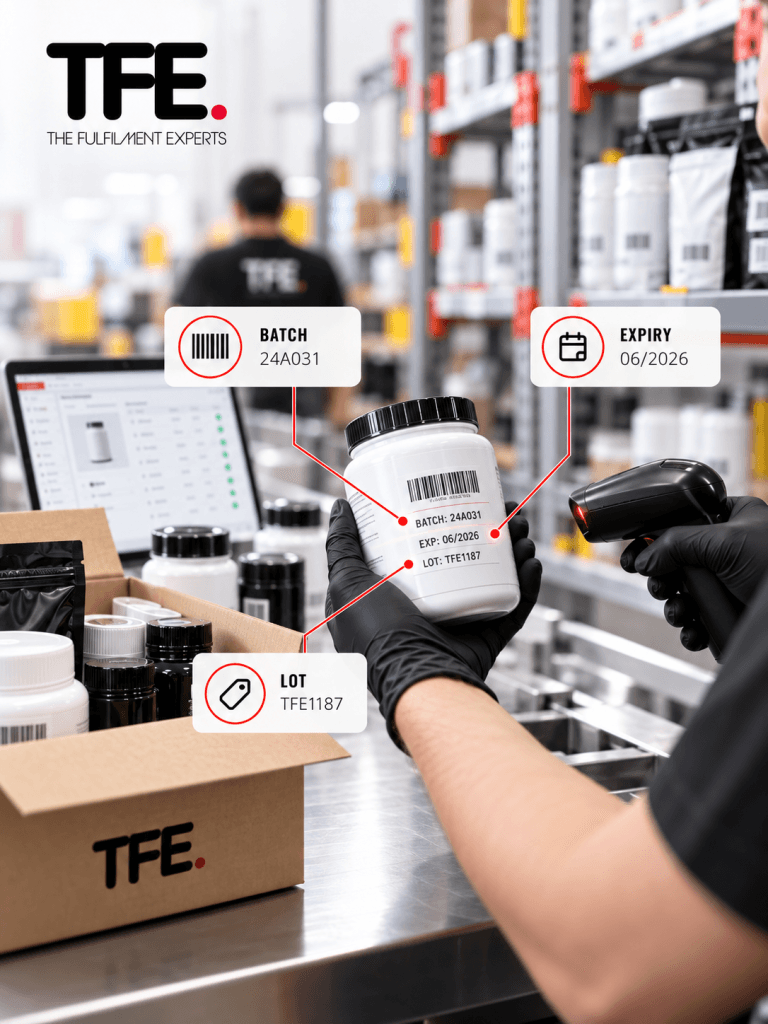
Batch information, expiry dates and lot references need to remain connected to physical stock so that the right inventory can be identified, managed and, where necessary, isolated quickly.
A fulfilment partner therefore needs more than available warehouse space. It needs processes that support accurate stock control throughout the life of the product.
Why Supplements Fulfilment Compliance Matters
Supplements often sit within large product ranges that include different flavours, strengths, pack sizes and formulations.
Two products can look almost identical while belonging to different batches or carrying different expiry dates.
This creates a fulfilment challenge.
A warehouse needs to know not only what product is in stock, but also which batch or lot it belongs to and how long that stock remains suitable for sale.
Good traceability is particularly important if a product ever needs to be withdrawn or recalled. UK food traceability guidance requires businesses to maintain records that allow food to be traced through the supply chain, while defining batches can help limit the scope of a withdrawal or recall.
The key question is not simply “How much stock do we have?” It is “Which stock do we have, from which batch, and how long can it remain in circulation?”
Three Controls Behind Reliable Supplement Fulfilment
Supplement inventory cannot always be managed as one simple stock figure.
Different units of the same SKU may belong to different production batches, carry different expiry dates or need to remain identifiable by lot reference.
Reliable fulfilment therefore depends on keeping these details connected to the physical inventory throughout storage and order processing.
BATCH TRACKING
Connects inventory to the production batch it came from, helping affected stock remain identifiable if an issue arises.
EXPIRY DATE CONTROL
Keeps shelf life information visible so stock approaching expiry can be monitored and managed appropriately.
LOT TRACEABILITY
Adds another layer of product identification, making it easier to locate specific inventory when action is required.
Together, these controls provide a clearer picture of exactly what stock is in the warehouse, not just how much.
From Goods In to Traceable Inventory
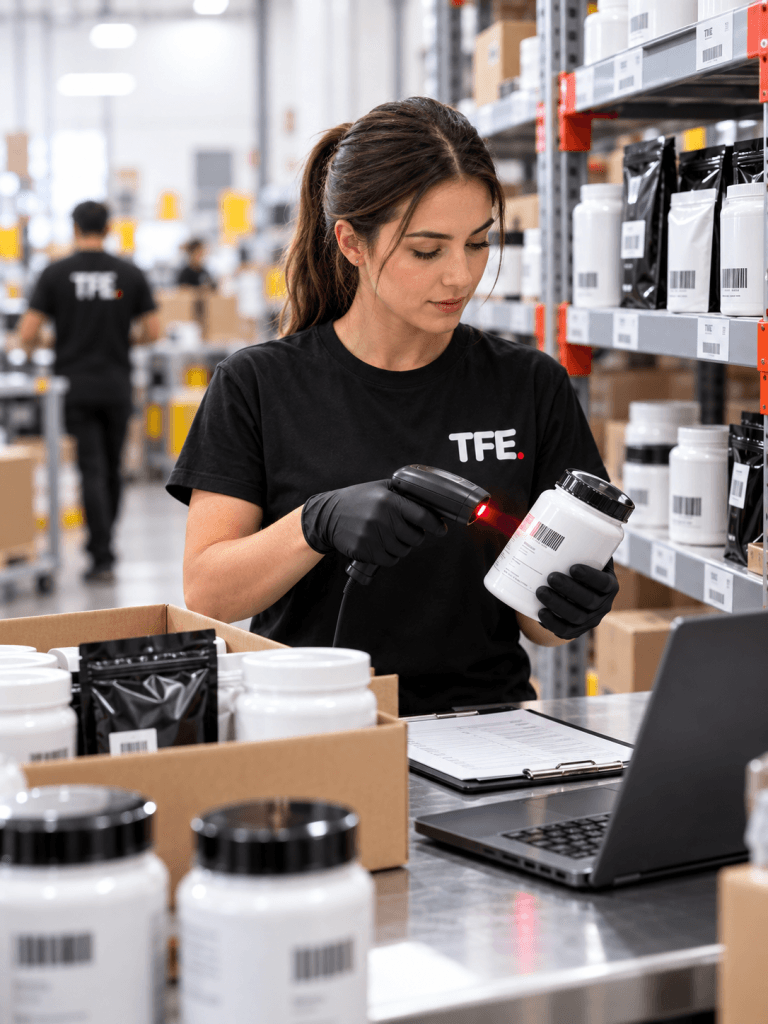
When supplement stock arrives at the warehouse, accurate receiving becomes the foundation for everything that follows.
The team checks incoming products against the expected delivery information and records the stock correctly before it enters storage. For supplements, this process needs to capture more than just the product name and quantity.
WHAT IS CHECKED
✅ SKU and product identity
✅ received quantity
✅ batch or lot reference
WHAT IS RECORDED
✅ expiry or best before information
✅ storage instructions supplied for the product
✅ discrepancies or damaged stock
Once these details are connected to the inventory record, the warehouse has a clearer basis for managing the stock throughout fulfilment.
This is also where errors are easier to prevent than correct later. Missing batch or expiry information at goods in can make traceability more difficult once stock begins moving through the warehouse.
Accurate goods in creates the data foundation for stock rotation, picking and traceability later.
Managing Expiry Dates Without Losing Stock Visibility
Expiry management is not simply about removing expired products.
Different batches of the same SKU may carry different dates, which means stock needs to remain distinguishable as inventory moves through the warehouse.
A clear inventory system can help teams identify stock according to its expiry status and apply the appropriate handling rules.
CURRENT STOCK
Inventory comfortably within its shelf life and available for fulfilment.
APPROACHING EXPIRY
Stock that may need closer monitoring or action according to the brand’s agreed rules.
QUARANTINED STOCK
Products held separately while an issue is investigated or a decision is made.
The exact stock rotation method should reflect the product and the instructions agreed with the brand.
The objective is to maintain visibility so stock does not disappear into one undifferentiated inventory figure.
What Happens if a Batch Needs to Be Isolated?
A recall or product issue does not necessarily affect every unit of a product.
If accurate batch or lot information has been maintained, the business can identify which inventory may be affected and take more targeted action.
IDENTIFY
Confirm the relevant product and affected batch or lot reference.
LOCATE
Find the associated warehouse inventory.
QUARANTINE
Separate affected stock from inventory available for normal orders.
REVIEW
Follow the instructions provided by the brand regarding withdrawal, return, disposal or other action.
Traceability cannot prevent a product issue, but it can make the operational response more controlled and targeted.
Labelling and Storage Still Matter
Batch and expiry tracking form part of a wider compliance picture.
Food supplements sold in Great Britain must comply with general food labelling requirements as well as supplement specific requirements. These cover areas such as product information, ingredients, recommended daily dosage, storage instructions and date marking.
From a fulfilment perspective, warehouse teams need to follow the handling and storage instructions provided for each product. This helps maintain packaging integrity, keep required labels intact and ensure products are stored under the appropriate conditions.
The fulfilment provider supports the operational process, but responsibility for ensuring that the supplement itself meets the relevant regulatory requirements remains with the appropriate food business operator.
Important compliance consideration
Compliance requirements vary by product and market. Brands should obtain appropriate regulatory advice for their supplements, labelling and food business obligations.
Choosing a 3PL for Supplements Fulfilment Compliance
When comparing fulfilment partners, supplement brands should look beyond standard picking, packing and storage rates.
The right provider needs to understand how stock should be received, identified, stored and managed throughout the fulfilment process.
Before choosing a 3PL, brands should ask the following questions:
✅ Can batch and lot references be recorded?
✅ Can expiry dates remain visible against inventory?
✅ How is incoming stock checked for discrepancies?
✅ Can affected products be identified and quarantined?
✅ Are product specific storage and packing instructions followed?
✅ Can the brand maintain visibility over stock and orders?
TFE’s supplements and vitamins fulfilment service supports the additional stock management and handling requirements of health and wellness products, including batch tracking and expiry date management.
Combined with connected warehouse technology, these processes help brands maintain a clearer view of their inventory as the business grows.
Supplements Fulfilment Compliance Is Built on Traceability
Supplements fulfilment compliance depends on maintaining accurate product information from the moment stock arrives through storage, picking and dispatch.
Batch tracking helps identify specific production batches, while expiry control keeps stock with different remaining shelf lives distinguishable. Lot traceability also makes it easier to locate affected inventory when action is required.
At The Fulfilment Experts, we support supplement brands with structured warehouse processes, connected technology and inventory visibility to help them manage their fulfilment requirements.
A reliable fulfilment operation is not simply about storing and dispatching products. It is about maintaining the stock control and traceability needed to support the business as it grows.